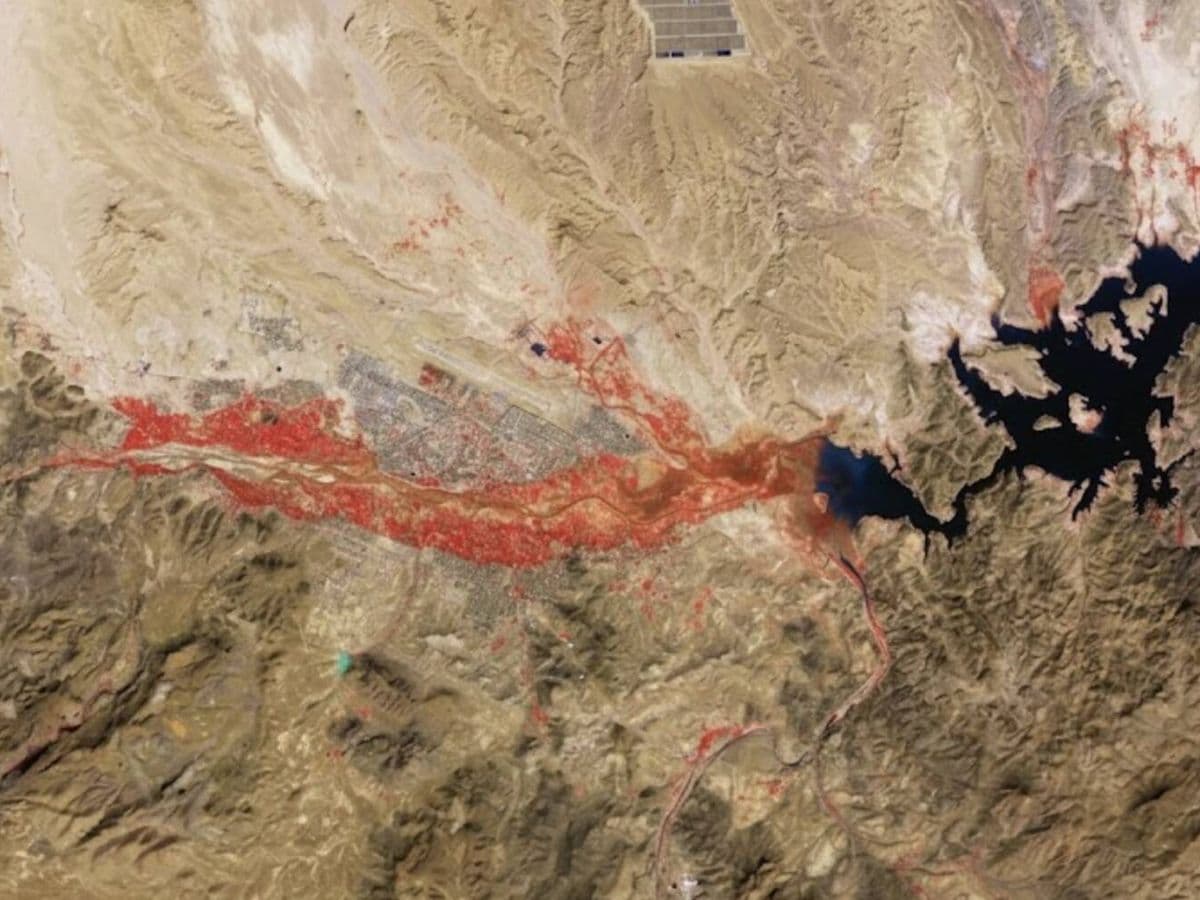
Satellites belonging to the European Space Agency, as part of the "Copernicus 2" system, captured a recent satellite image of an area located in southern Morocco, specifically in the vicinity of the city of Ouarzazate, which showed a remarkable extension of a reddish-colored patch covering vast areas of the natural surroundings of the region.
Technical data associated with this image indicates that this color extension is not linked to any disaster or unnatural environmental event. Rather, it is attributed to the method of processing spatial data using remote sensing techniques, particularly the near-infrared spectrum, which is used to monitor the state of vegetation and measure the degree of its biological activity.
This method is based on a simple scientific principle: plants absorb a large portion of natural red light while strongly reflecting infrared radiation that is invisible to the naked eye. When satellites capture these signals and convert them into images, areas with active and dense vegetation appear in bright red, which explains the appearance of this extended patch in the vicinity of Ouarzazate in the satellite image.
The satellite image shows that this color extension clearly follows watercourses and valleys passing through the mountainous terrain of the Anti-Atlas range, an area located within a semi-desert climatic zone directly influenced by the extensions of the Sahara Desert.
Despite the harshness of the natural conditions, the capture of the image coincided with a seasonal period characterized by moderate winter precipitation, which contributed to the activation of several watercourses and the improvement of vegetation in some limited areas.
Spatial monitoring data highlight increasing vegetative activity in several small agricultural plots scattered along the valleys, where water availability has been reflected in a noticeable improvement in vegetation cover compared to adjacent desert areas that remained less biologically active.
The satellite image also revealed the proximity of the city of Ouarzazate, one of the most prominent cities in southern Morocco, characterized by its geographical location within a valley surrounded by mountain ranges, in addition to its global fame as a filming location for several major international cinematic productions, which has given it a cultural and tourism dimension alongside its environmental and geographical importance.
The data also revealed the existence of a strategic water infrastructure in the region, most notably the Mansour Eddahbi Dam, which appears in dark color in the satellite images. It is considered one of the most important water facilities in the region, contributing to the management of water resources and the supply of agricultural activities. This dam relies on main tributaries, including the Ouarzazate River and the Draa River, one of the longest rivers in Morocco, making this water system a fundamental element in the stability of local agricultural activity.
The images also highlighted the Noor solar power plant, located approximately ten kilometers north of Ouarzazate. It is one of the largest concentrated solar power plants in the world, relying on thousands of reflective mirrors that direct sunlight toward thermal receivers to produce energy, as part of Morocco's approach to developing renewable energies and reducing dependence on traditional sources.